

 21 Minute Read
Contents:
During Year 11, your child will need to make important decisions about their post-16 education. Some students already know which subjects they enjoy, have a particular career in mind, or have a clear idea of the route they’d like to take. Others are still exploring the different post-16 options and deciding which pathway best matches their interests and future plans.
A Levels are often the first qualification people think of after GCSEs, but they’re not the only pathway. Students can choose from a range of academic, vocational, technical, and work-based routes, each offering different ways to learn and develop their skills.
In this guide, we’ll look at the main post-16 options available after GCSEs, including A Levels, BTECs, T Levels, apprenticeships, and the new V Levels, which are being introduced from 2027. We’ll explain how each route works, who it may suit, and where it can lead, helping you support your child in making an informed decision about their next steps.
Understanding the different types of post-16 options
Although there are many post-16 qualifications available, most fall into three broad categories: academic qualifications, vocational and technical qualifications, and work-based learning.
Academic qualifications
Academic qualifications focus on developing knowledge and understanding within individual subjects. They are usually taught in the classroom and are often assessed through written examinations. A Levels are the best-known example in England and are a common route into higher education.
Vocational and technical qualifications
Vocational and technical qualifications combine subject knowledge with practical learning. Some provide a broad introduction to a vocational subject, while others are designed to prepare students for a particular industry or occupation. Examples include BTECs, T Levels, Level 2 and Level 3 Diplomas, and the new V Levels.
Work-based learning
Work-based learning combines paid employment with training. The main example is an apprenticeship, where students work for an employer while gaining a recognised qualification.
Every pathway offers different opportunities, and there is no single “best” option. The right choice will depend on your child’s interests, career ambitions, and preferred way of learning.
A Levels (academic route)
A Levels are the traditional academic route after GCSEs. Students usually choose a small number of subjects to study in greater depth, either continuing subjects they enjoyed at GCSE or exploring new ones.
Most students study three A Levels over two years, although some combine A Levels with other qualifications, such as a BTEC, depending on their school or college, interests, and future plans. A Levels are available in a wide range of subjects, including traditional academic subjects such as English, maths, sciences, and humanities, as well as subjects like art, psychology, languages, and business.
How are A Levels taught and assessed?
A Levels are primarily classroom-based qualifications that focus on developing subject knowledge and independent study skills. Assessment is mainly through written examinations at the end of the two-year course. Some subjects also include practical assessments or coursework components, but exams make up the majority of the final grade.
Students are expected to become increasingly independent in their studies. Compared with GCSEs, A Levels involve studying fewer subjects in greater depth and require students to manage their study time effectively outside of lessons.

Where can A Levels lead?
A Levels are a well-established route into higher education. Many university courses have specific A Level entry requirements, particularly competitive courses such as medicine, dentistry, veterinary science, and some STEM degrees.
They can also lead directly into employment, apprenticeships, or further training. In addition to subject knowledge, A Levels help students develop transferable skills such as critical thinking, analysis, problem-solving, and independent study skills, which are valued in higher education and across a wide range of careers.
Who might A Levels suit?
A Levels may suit students who:
- enjoy studying academic subjects in depth
- are comfortable with exam-based assessment
- enjoy analysing information, evaluating evidence, or developing arguments
- are considering university, particularly a course with specific A Level requirements
However, A Levels are just one of several post-16 pathways. Vocational, technical, and work-based qualifications can also open doors to higher education, apprenticeships, and skilled employment.
BTECs (applied general qualification)
BTECs are one of the best-known vocational qualifications available to students after GCSEs. They are applied qualifications, meaning students learn about a subject while also developing skills that can be used in real-world settings.
BTEC originally stood for the Business and Technology Education Council, although today the qualifications are awarded by Pearson.
BTECs are available at different levels and in a wide range of subjects. They are particularly popular in areas such as:
- Art and design
- Business
- Construction
- Digital
- Early Years
- Engineering
- Health and Social Care
- Land-based
- Media
- Music
- Performing Arts
- Science
- Sport
- Travel and Tourism
The subjects available vary between schools and colleges, so it’s worth checking local college websites to see what’s on offer.

How are BTECs taught and assessed?
BTECs are commonly taught in schools, sixth forms, and further education colleges. They combine classroom learning with practical activities, projects, and assignments, allowing students to develop both subject knowledge and practical skills.
Assessment takes place throughout the course and typically includes a mixture of internal assessment and externally assessed tasks or examinations. Depending on the subject and qualification, students may complete:
- written assignments
- projects
- practical assessments
- presentations
- externally assessed tasks and exams
This combination of assessment methods can suit students who prefer to demonstrate their understanding in different ways, rather than relying on a single set of final exams.
BTEC grades explained
When your child completes their BTEC Level 3 qualification (National Diploma) they will be awarded one of the following grades:
- D* – starred distinction
- D – distinction
- M – merit
- P – pass
What level of BTEC can your child study?
BTECs are available at a range of levels. After GCSEs, many students study a Level 3 BTEC qualification, which can be equivalent in size to one, two, or three A Levels depending on the course.
Students may also study BTECs at Level 2, particularly if they want to build their knowledge and skills before progressing to a Level 3 qualification.
The entry requirements vary depending on the subject, level, and provider. If your child does not achieve the GCSE grades needed for their first-choice course, there may be other routes available, including starting at a lower level and progressing.
Where can BTECs lead?
A Level 3 BTEC can lead to several different pathways.
University
Many universities accept BTEC qualifications for entry onto a wide range of degree courses, and students with BTECs successfully progress onto higher education courses every year.
However, entry requirements vary between universities and degree courses. While BTECs are accepted for many courses, some universities or specific degree programmes may require an A Level alongside a BTEC qualification, a particular BTEC pathway, or certain optional units relevant to the degree your child wants to study.
If your child has a particular university course in mind, it’s worth checking the entry requirements early on so they can choose a post-16 pathway that keeps their future options open.
Detailed information regarding university progression can also be found in Pearson’s Guide for BTEC Level 3 Students.
Employment
BTECs are designed to develop both knowledge and practical skills, which can help students prepare for employment in their chosen sector.
The industry knowledge, teamwork, communication, and problem-solving skills developed through a BTEC can be valuable to employers.
Apprenticeships and further training
Some students use a BTEC as a stepping stone into an apprenticeship or further vocational training. The knowledge and skills gained during the course can help them progress to the next stage of their chosen career pathway.
T Levels (technical route)
Introduced in 2020, T Levels are two-year technical qualifications designed to prepare students for skilled careers in specific industries. They were developed in partnership with employers to help students gain the knowledge and practical skills needed for the workplace.
Each T Level is equivalent in size to three A Levels and combines classroom learning with a substantial industry placement. They are intended for students who have a clear interest in a particular career area and want to develop the technical skills required to progress into employment, an apprenticeship, or higher education.

How are T Levels taught?
Like A Levels and BTECs, T Levels are primarily taught in colleges and some sixth forms. They combine classroom learning with practical experience to prepare students for a particular industry or occupational area.
Every T Level has two main components:
- Classroom learning, where students study a core curriculum covering the knowledge and concepts needed across the industry, before developing more specialised knowledge and skills through an occupational specialism.
- An industry placement in which students spend at least 45 days with an employer, gaining hands-on experience in a real workplace.
This combination allows students to build industry-specific knowledge and practical skills while building confidence in a professional environment.
How are T Levels assessed?
T Levels use a mixture of assessment methods, including:
- written examinations
- employer-set projects
- practical assignments
Students receive separate grades for the core component and their occupational specialism. The core component is graded from A* to E, while the occupational specialism is awarded a Pass, Merit, or Distinction. These results are then combined to produce an overall T Level grade of Pass, Merit, Distinction, or Distinction*.
How do A Level, BTEC, and T Level grades compare
What T Level subjects are available?
T Levels are available in a growing range of subjects, including:
- Accounting
- Agriculture, Land Management and Production
- Animal Care and Management
- Building Services Engineering
- Business and Administration
- Craft and Design
- Design, Surveying and Planning for Construction
- Digital
- Education and Early Years
- Engineering and Manufacturing
- Finance
- Health
- Legal Services
- Management and Administration
- Maintenance, Installation and Repair for Engineering and Manufacturing
- Science
Not every school or college offers every T Level, so availability will depend on where you live.

Where can T Levels lead?
T Levels are designed to prepare students for a range of progression routes, including:
- skilled employment
- higher or degree apprenticeships
- higher technical qualifications
- university
Many universities now accept T Levels for entry onto a range of degree courses. However, entry requirements vary between universities and courses.
If your child is considering university, it’s important to check individual course entry requirements before making their post-16 choices.
Who might a T Level suit?
A T Level may be a good option if your child:
- has a clear interest in a particular industry or career
- enjoys combining classroom learning with practical experience
- wants to gain experience in a real workplace alongside their studies
- wants to develop technical skills before moving into employment, an apprenticeship, or higher education
How are T Levels different from BTECs?
T Levels and BTECs are both vocational qualifications, but they have different purposes.
T Levels are more specialised technical qualifications, designed with input from employers and include a substantial industry placement. They focus more directly on preparing students for specific occupations.
BTECs are generally broader applied qualifications that allow students to explore a subject area and develop practical skills. They are often assessed through a mixture of coursework, practical tasks and exams.
Neither route is automatically better than the other. The right choice depends on your child’s interests, career goals and the type of course that best suits them.
Are T Levels replacing BTECs?
T Levels are part of wider reforms to post-16 qualifications in England. These reforms aim to simplify the qualification landscape, reduce unnecessary overlap between courses, and ensure students have clear progression routes into higher education, apprenticeships, and employment.
As part of these changes, some larger Level 3 BTEC qualifications and other applied general qualifications are being phased out where they overlap with T Levels. However, this does not mean that all BTECs are disappearing. Many BTECs continue to be available, and the changes vary depending on the subject and qualification.
If your child is interested in a particular subject, it’s important to check with their chosen school or college to see which qualifications are available.
Pearson’s regularly updated guide also provides details of which BTEC qualifications remain available and any planned changes by subject: Post-16 vocational qualification funding guide for England.
Apprenticeships (work-based route)
For students who are keen to start their career straight after GCSEs, an apprenticeship offers the opportunity to earn a salary while gaining valuable workplace experience and a recognised qualification.
Unlike A Levels, BTECs, and T Levels, where most learning takes place in a school or college, apprentices spend the majority of their time working for an employer. They are employed from the start of their apprenticeship, are paid a salary, and have a contract of employment with the same workplace rights and benefits as other employees, including paid holidays.
Apprentices typically spend around 80% of their time in the workplace and at least 20% completing off-the-job training. This training may take place at a college, with a training provider, or online, depending on the apprenticeship.
Throughout the programme, apprentices develop the knowledge and skills needed for their chosen occupation under the guidance of both their employer and training provider.

What levels of apprenticeship are available?
Apprenticeships are available at different levels, from GCSE level through to degree level, allowing students to progress as they gain experience and qualifications. Entry requirements vary depending on the employer and apprenticeship.
What careers are apprenticeships available in?
Each apprenticeship follows an occupational standard, which sets out the knowledge, skills, and behaviours needed for that particular role. There are apprenticeship standards available across hundreds of occupations, including:
- Agriculture, environmental and animal care
- Business and administration
- Care services
- Catering and hospitality
- Construction and the built environment
- Creative and design
- Digital
- Education and early years
- Engineering and manufacturing
- Hair and beauty
- Health and science
- Legal, finance and accounting
- Protective services
- Sales, marketing and procurement
- Transport and logistics
New apprenticeship standards continue to be developed, so the range of opportunities is constantly evolving.
Amazing Apprenticeships has a regularly updated A-Z of Apprenticeship Standards listing all of the currently approved apprenticeship standards.
Finding an apprenticeship
There are several ways your child can find an apprenticeship:
- The Government’s Find an apprenticeship service allows young people to search for and apply for apprenticeship vacancies.
- UCAS also advertises apprenticeship opportunities and students can search and filter vacancies by apprenticeship level, industry, and location.
- Your child can also look at opportunities advertised directly by employers or through training providers.
- They may wish to contact local businesses to ask about potential apprenticeship opportunities, although many vacancies are advertised online.
Competition for apprenticeships can be high, particularly with well-known employers. Encourage your child to research opportunities early on, attend careers events and open days, and tailor each application to the role they are applying for.
The application process can vary between employers. Some may ask for a CV, while others use online application forms or written questions.
How are apprentices assessed?
Unlike school and college-based qualifications, apprenticeships are assessed through a combination of workplace performance and formal assessment.
During the apprenticeship, employers and training providers review the apprentice’s progress to ensure they are developing the knowledge, skills, and behaviours required for their chosen occupation.
Most apprenticeships conclude with an end-point assessment (EPA). This independent assessment confirms that the apprentice has met the occupational standard for their role. Depending on the apprenticeship, the EPA may include practical observations, projects, professional discussions, presentations, or written tests.

Where can apprenticeships lead?
Many apprentices remain with their employer after completing their apprenticeship, moving into a permanent role or taking on greater responsibility. Others use the skills and experience they have gained to secure employment with a different employer or continue their training by progressing to a higher-level apprenticeship.
Depending on the level of the apprenticeship and the qualifications gained, some apprentices also choose to study at university. If your child is considering university, it’s important to check the entry requirements for their chosen course, as these vary between universities.
Who might an apprenticeship suit?
An apprenticeship may be a good option if your child:
- is keen to enter the workplace as part of their post-16 education
- wants to earn a salary while gaining a recognised qualification
- enjoys developing practical skills in a real workplace
- has a particular career or industry in mind
Other vocational qualifications
Alongside BTECs, T Levels, and apprenticeships, there are many other vocational qualifications designed to develop practical skills, technical knowledge, and experience related to a particular career area.
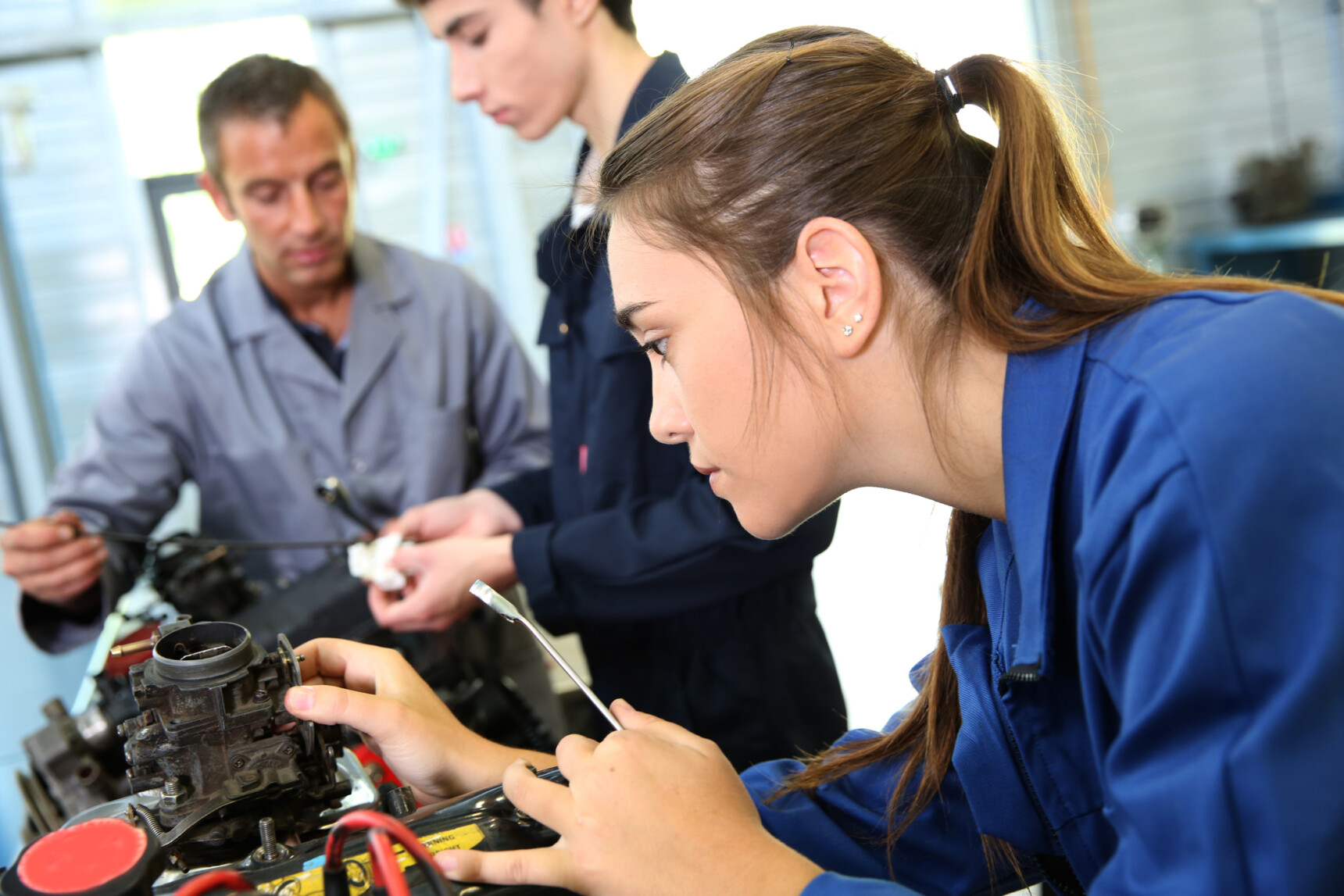
If you’ve been looking at college prospectuses, you may have come across qualifications such as a Level 2 Diploma in Hairdressing or a Level 3 Diploma in Health and Social Care. These types of qualifications are particularly common in sectors where developing practical skills and industry-specific knowledge is important, including hairdressing, beauty therapy, childcare, construction, hospitality, motor vehicle maintenance, and health and social care.
What are Level 2 and Level 3 Diplomas?
The term “Diploma” refers to a broad group of vocational qualifications rather than a single qualification type. Diplomas are available at different levels and in different subject areas depending on the qualification, course content, and industry requirements.
The content and purpose of a Diploma vary depending on the qualification. Some are designed to prepare students for a specific occupation or industry, while others develop broader vocational knowledge and practical skills.
Level 2 and Level 3 Diplomas are available across a wide range of sectors, including:
- Health and Social Care
- Early Years and Childcare
- Beauty Therapy
- Engineering and Electrotechnical
- Construction
- Sport and Fitness
- Hospitality and Catering
- Creative industries
- Land-based industries
The exact qualifications available will depend on the school, college, or training provider, as well as the subject area.

How are Level 2 and Level 3 Diplomas taught?
Teaching and assessment vary depending on the subject, qualification, and awarding organisation. Many diploma courses combine classroom learning with practical activities, allowing students to develop and demonstrate their skills.
Students may be assessed through a combination of:
- practical demonstrations
- assignments and projects
- portfolios of evidence
- observations of practical skills
- written assessments, where appropriate
Some courses may also include work experience, industry placements or opportunities to practise skills in realistic working environments.
What level should your child study?
The level a student starts at depends on their previous qualifications, experience, and the entry requirements set by the school, college, or training provider.
- Level 2 Diplomas are often suitable for students who are beginning to develop skills and knowledge in a particular vocational area. In some subjects, they provide a progression route to Level 3 study, although entry requirements vary between courses.
- Level 3 Diplomas involve more advanced study and are designed for students who want to develop specialist knowledge and skills in a particular area.
Where can Level 2 and Level 3 Diplomas lead?
Vocational Diplomas can lead to a range of progression routes, depending on the qualification and subject area. Students may move into employment, continue with further vocational training, or take up an apprenticeship.
Some Level 3 Diplomas may also support progression to higher education. However, university entry requirements vary between courses and institutions, so students considering a degree should check whether their chosen qualification meets the requirements for their intended course.
Who might a diploma suit?
A Level 2 or Level 3 Diploma may be a good option if your child:
- has a clear interest in a particular occupation or industry
- enjoys developing practical skills through hands-on activities
- wants to prepare for employment in a specialist field
- prefers learning that combines theory with practical application
What about NVQs?
You may still come across the term NVQ (National Vocational Qualification) when researching vocational routes. NVQs are work-based qualifications that assess whether someone has developed the skills and knowledge needed to carry out a particular job role to the required standard.
NVQs are usually assessed through practical demonstration of skills and evidence of competence. They are often completed in a workplace setting, although the exact delivery and assessment methods depend on the qualification and sector.
The vocational qualification landscape has changed over time, but NVQs remain recognised qualifications and the term is still used in some industries.
Alongside NVQs, there is now a wide range of vocational qualifications available from different awarding organisations. The right option will depend on the industry, the learner’s starting point, and their future plans.
V Levels (coming from September 2027)
From September 2027, students will begin to see a new type of post-16 qualification called V Levels. These are being introduced as part of wider reforms to vocational education in England and will sit alongside A Levels, T Levels, and apprenticeships.
V Levels are designed for students who want to combine career-focused learning with the flexibility to keep their future options open. Unlike T Levels, which are focused on preparing students for specific occupational areas, V Levels will offer a broader introduction to a vocational subject area before students decide whether to specialise further.
How will V Levels work?
Each V Level will be equivalent in size to one A Level, meaning students will be able to combine them with A Levels or other V Levels to create a personalised programme of study. For example, a student might choose a V Level alongside two A Levels, or study three V Levels.
V Levels will combine classroom learning with applied projects and practical assessment. They are being developed with employers to help ensure students gain the knowledge and skills needed for further study and employment.
Which subjects will be available?
The first V Levels, due to launch in September 2027, will be available in:
- Education and Early Years
- Accounting and Finance
- Digital Systems and Data
The Government plans to introduce additional subjects in phases over the following years, meaning the range of V Levels is expected to expand over time.
What do V Levels mean for existing qualifications?
As V Levels are introduced, some existing applied vocational qualifications, including some BTECs, will be phased out where they overlap with the new qualifications. However, this will happen gradually and on a subject-by-subject basis, meaning students will continue to see a mixture of qualifications available during the transition.
If your child is applying for courses starting in September 2027 onwards, it’s worth checking with local schools and colleges to see which qualifications are available. Different providers may offer different combinations of BTECs, V Levels, and T Levels as the reforms are rolled out.
Should your child choose a V Level?
As V Levels are a new qualification, it will take time for schools, colleges, universities, and employers to become familiar with them. They are intended to provide an additional post-16 option and to give students greater flexibility when combining vocational and academic study.
If your child will be applying for post-16 courses from autumn 2026 onwards, they may start to see V Levels included in prospectuses and at open days. Speaking to teachers and course tutors will help you understand whether a V Level is the right choice for their interests and future plans.

Choosing the right post-16 pathway
With so many post-16 options available, it’s easy to feel overwhelmed. The important thing to remember is that there is no single “best” route after GCSEs. A Levels, BTECs, T Levels, apprenticeships, and other vocational qualifications can all support progression into employment, further training, and, for some qualifications, higher education.
When comparing options, encourage your child to consider:
What are their future goals?
If your child has a particular career or degree course in mind, check the entry requirements and work backwards to see which qualifications and experiences will help them get there. Some careers require specific qualifications, while others offer several different routes.
How do they prefer to learn?
Think about the balance of classroom study, practical learning, coursework, exams, and workplace experience that will suit your child best.
For example:
- A Levels are mainly academic qualifications, usually assessed through written examinations.
- BTECs combine subject knowledge with applied learning and a range of assessment methods.
- T Levels combine classroom-based learning with a substantial industry placement.
- Apprenticeships combine employment with structured training and a recognised qualification.
- Level 2 and Level 3 Diplomas vary by subject but often focus on developing practical skills and knowledge for a particular industry or occupation.
How do they perform in different types of assessment?
Some students thrive in traditional written examinations, while others perform better through coursework, practical assessments, projects, or demonstrations of their skills over time.
Choosing a qualification with an assessment style that plays to your child’s strengths can help them stay motivated and achieve their potential.

What opportunities are available locally?
Not every school or college offers every qualification. Visit open days, compare courses, and ask about facilities, work placements, teaching approaches, and progression routes.
If your child is considering an apprenticeship, start researching early. Vacancies can be competitive, and applications often open well before students finish their GCSEs.
Keep an open mind
It’s perfectly normal for young people to change their minds about what they want to do. Choosing a pathway at 16 doesn’t necessarily determine the rest of your child’s career. Many young people change direction, gain further qualifications, or progress through different routes over time.
The most important thing is choosing a route that matches your child’s current interests and ambitions.
Ultimately, the best post-16 pathway is one that gives your child the confidence, knowledge, and skills to take their next steps. By researching the available options, visiting open days, and speaking to teachers, careers advisers, and training providers, you can help them make an informed decision based on their interests and ambitions.

 Copy URL







Comments